Key Takeaways
How Stem Cells Restore Hair
Non-surgical cartilage repair options are most effective in the early to moderate stages of joint damage, with effectiveness decreasing as cartilage loss becomes severe.
Works On Multiple Alopecia Types
Early-stage damage responds especially well to stem cell therapy, PRP injections, and lifestyle-supported regenerative protocols.
Results Build Over 12 Months
Moderate-stage damage still benefits significantly from regenerative options but may require longer treatment plans for meaningful results.
Non-Surgical Alternative To Transplants
Late-stage cartilage damage typically responds less to non-surgical approaches, though some patients still see pain reduction and improved mobility.
Tailored Protocols Get Real Results
Working with an experienced regenerative wellness provider ensures the right treatment is matched to your specific stage of joint damage.
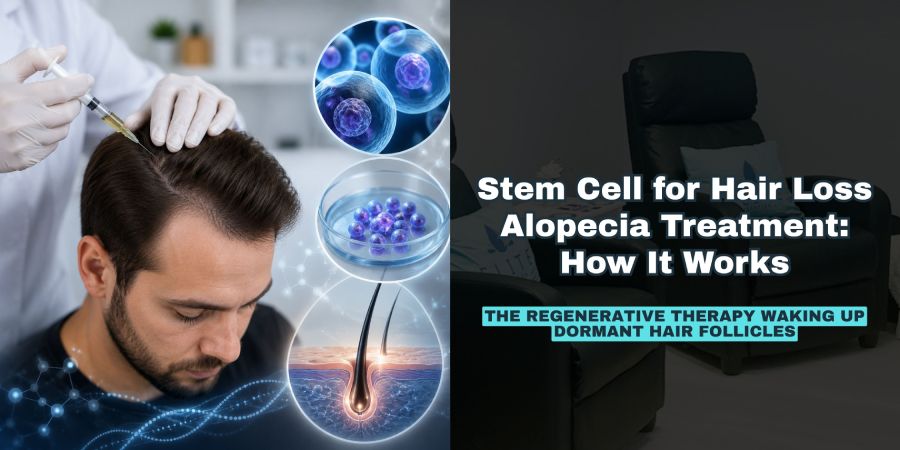
Stem cell for hair loss alopecia treatment works by stimulating dormant hair follicles, reducing scalp inflammation, and triggering the body’s natural regenerative processes around the hair growth cycle. The therapy uses concentrated growth factors and signaling molecules from stem cells to wake up follicles that have stopped producing hair, supporting both thicker existing hair and new growth in thinning areas.
Below is a closer look at how stem cell for hair loss alopecia treatment actually works, what to expect from the process, and which patients see the strongest results. If you’re new to the broader category of stem cell therapy, exploring the basics first gives helpful context before diving into the hair-specific application.
How Stem Cell for Hair Loss Alopecia Treatment Actually Works
Several mechanisms combine to make stem cell therapy effective for hair loss. Below is a closer look at how stem cell for hair loss alopecia treatment delivers its results.
According to a systematic review published in Plastic and Reconstructive Surgery Global Open analyzing randomized controlled trials of autologous stem cell-derived therapies for androgenetic alopecia, the research demonstrates that these treatments are safe and effective for enhancing hair density and supporting regeneration, with stem cells leveraging their ability to promote tissue repair and modulate the inflammation that contributes to hair loss.
This is exactly why stem cell for hair loss alopecia treatment has emerged as one of the more promising approaches in the broader landscape of regenerative wellness.
1. Stimulating Dormant Hair Follicles
One of the primary ways stem cell for hair loss alopecia treatment works is by stimulating hair follicles that have gone dormant. As hair loss progresses, follicles don’t necessarily disappear. They often just stop producing hair while remaining alive under the scalp.
Stem cells deliver growth factors and signaling molecules that wake these dormant follicles back up. Once active again, the follicles can resume their normal hair production cycle, leading to thicker, healthier hair in areas that previously appeared thinning.
This mechanism is one of the main reasons stem cell therapy works on hair loss that other treatments have failed to address. The activation of dormant follicles addresses the root cause rather than just maintaining existing hair.
2. Reducing Inflammation Around the Scalp
Chronic, low-grade inflammation around hair follicles is a contributing factor in many types of hair loss, especially androgenetic alopecia and alopecia areata. Stem cell for hair loss alopecia treatment reduces this inflammation through the natural anti-inflammatory properties of stem cells and their secreted factors.
By calming the inflammatory environment around the follicles, the treatment creates conditions where hair can grow properly again. This is similar to how stem cells reduce inflammation in joints during stem cell therapy for anti-aging applications, where reduced inflammation supports tissue regeneration throughout the body.
The anti-inflammatory effect compounds over time. Each treatment session contributes to a calmer scalp environment that supports ongoing hair growth.
3. Promoting New Blood Vessel Growth
Hair follicles depend on blood flow to receive nutrients and oxygen. As hair loss progresses, blood vessels around affected follicles often become sparse, reducing the resources available for hair production.
Stem cell for hair loss alopecia treatment promotes the growth of new blood vessels around treated follicles. This improved blood supply delivers the nutrients, oxygen, and growth factors that follicles need to produce healthy hair consistently.
The improved circulation also helps explain why patients often notice general scalp health improvements alongside the visible hair growth, including reduced scalp dryness and itching.
4. Triggering the Body’s Natural Healing Response
Stem cells signal to the body that an area needs healing attention. Stem cell for hair loss alopecia treatment essentially tells the body to direct healing resources to the scalp, supporting the regenerative processes that hair production depends on.
This whole-body signaling is one of the most distinctive features of stem cell therapy. Rather than just treating the visible symptoms of hair loss, the therapy engages the body’s own systems to address the underlying causes.
The healing response continues for weeks and months after each treatment session, which is why patients typically see continued improvement over many months rather than just immediately after treatment.
5. Supporting the Hair Growth Cycle
Hair growth follows a natural cycle of growth, transition, and rest. In many types of alopecia, this cycle gets disrupted, with follicles spending too much time in the resting phase or transitioning out of growth too quickly.
Stem cell for hair loss alopecia treatment helps restore a healthier growth cycle by supporting the follicles’ ability to spend more time in active growth phase and less time dormant. The result is thicker, fuller hair over time.
Restoring normal cycling through stem cell for hair loss alopecia treatment allows the hair to reach its full potential growth. The cycle restoration is especially important for chronic conditions where the underlying disruption has been ongoing for years.
Which Types of Hair Loss Respond Best
Different alopecia conditions respond differently to stem cell for hair loss alopecia treatment. Below is a quick reference for understanding which conditions typically see the strongest results.
Condition | Typical Response |
Androgenetic alopecia (pattern baldness) | Strong response, especially in early to moderate stages |
Alopecia areata | Good response when caught early |
Telogen effluvium | Excellent response when underlying cause is addressed |
Traction alopecia | Strong response when traction is stopped |
Diffuse thinning | Good response across the affected area |
Post-medical hair loss | Variable response depending on the cause |
Scarring alopecia | Limited response if scarring is advanced |
Late-stage complete baldness | Limited response without follicles present |
Each patient’s specific condition and timeline of hair loss affects the expected outcome. A thorough consultation determines whether stem cell therapy is the right approach for your situation.
What a Typical Treatment Protocol Looks Like
The standard stem cell for hair loss alopecia protocol involves multiple sessions over several months to deliver optimal results. Below is what most patients can expect.
The initial protocol typically includes 3 to 6 sessions spaced 4 to 6 weeks apart. Each session takes about 60 to 90 minutes and involves preparing the stem cells and applying them to the affected scalp areas through carefully controlled techniques.
Many patients also combine the treatment with complementary therapies. High dose ozone UV treatment supports overall systemic health and reduces inflammation throughout the body, which can amplify the effects of the targeted scalp treatment. Similarly, supportive IV therapy delivers nutrients that hair follicles need to produce healthy hair.
After the initial protocol, many patients continue with maintenance sessions every 4 to 6 months to support ongoing results. The exact schedule depends on the individual’s response and goals.
What to Expect During and After Treatment
A few practical details help patients prepare for the stem cell for hair loss alopecia treatment experience and the months following.
- Initial consultation lasts 30 to 60 minutes and includes scalp evaluation
- Treatment sessions typically last 60 to 90 minutes with minimal downtime
- Mild scalp tenderness may persist for 1 to 2 days after each session
- No significant restrictions on normal activities after treatment
- First visible results typically appear at 3 to 6 months
- Maximum results usually visible at 12 months
- Maintenance sessions every 4 to 6 months extend the benefits
These details help set realistic expectations for the treatment journey from start to long-term maintenance.
Other Conditions Where Stem Cell Therapy Helps
Stem cell therapy extends well beyond stem cell for hair loss alopecia applications. Many patients exploring it for alopecia discover the broader regenerative benefits available through the same therapy.
The therapy helps heal chronic pain without surgery in joints, cartilage, and soft tissues, making it valuable for athletes, active adults, and anyone managing ongoing pain conditions. Patients exploring stem cell options for hair loss often discuss other regenerative concerns during consultation.
UV therapy candidates and patients exploring various holistic therapies also frequently combine multiple modalities for comprehensive wellness benefits. The integration of complementary treatments often delivers stronger results than any single therapy alone.
Explore Stem Cell Therapy for Your Hair Loss with Elite IV Hydration
A consultation gives us the chance to evaluate your specific hair loss pattern, discuss whether stem cell therapy is the right approach, and walk through what a personalized protocol would look like. Call Elite IV Hydration at (941) 388-8723 or book online. With Jana Marra leading our team and two convenient Sarasota-area locations plus mobile services, our holistic approach to regenerative wellness makes it easier than ever to access cutting-edge therapies in a calm, personalized setting.
Frequently Asked Questions
Is stem cell therapy for hair loss safe?
Yes, when performed by experienced practitioners using proper protocols. Most patients experience minimal side effects, typically limited to temporary mild tenderness at treatment sites.
How soon will I see results?
Most patients notice initial improvement at 3 to 6 months, with continued progress through 12 months as the follicles fully respond.
Will the results last forever?
Results last several years for most patients, though periodic maintenance sessions help extend and enhance the benefits over time.
Can stem cell therapy replace hair transplant surgery?
For many patients, yes. The therapy delivers natural-looking results without the recovery, scarring, or invasive nature of surgical transplants.
Hair Regrowth That Works With Your Body
The patients who get the strongest results from stem cell therapy aren’t necessarily the ones with the most dramatic hair loss. They’re the ones who start earlier, commit to the full protocol, and combine the treatment with overall wellness practices that support healing throughout the body. Hair loss reflects what’s happening in the body more broadly, and addressing it through regenerative wellness often improves more than just the scalp. The most rewarding results come from patients who approach the journey as part of their broader health story.