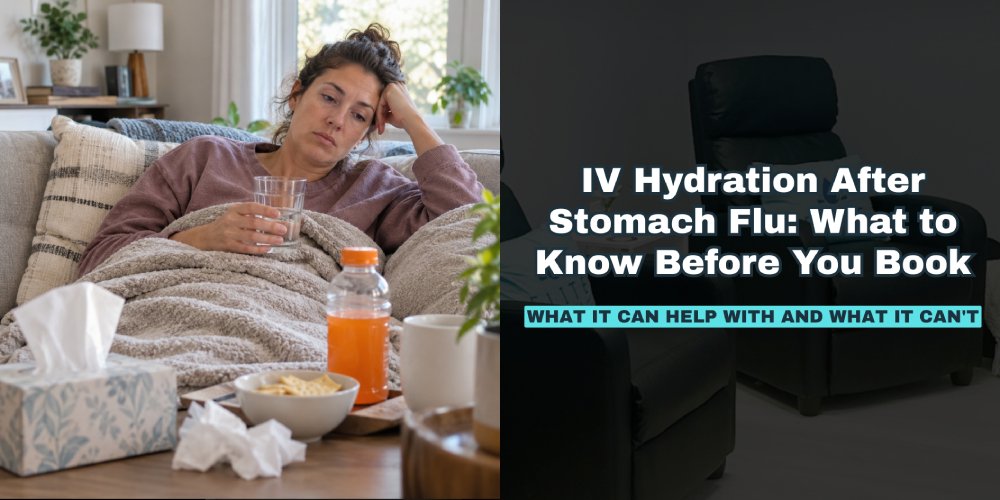
“I’ve been dealing with a stomach bug for the past two days, and even though the actual vomiting has mostly stopped, I still feel completely wiped out. Drinking water just isn’t cutting it, I feel weak and foggy, and someone mentioned IV hydration might help me bounce back faster. I don’t know if that’s actually a good idea at this stage, or if I should just keep pushing fluids and waiting it out.”
Once the acute vomiting has genuinely passed, IV hydration after stomach flu can make real sense, specifically because of what a stomach bug does to your body’s fluid balance and your ability to replace it orally. Vomiting and diarrhea pull fluid and electrolytes out of your system faster than most people realize, and IV hydration delivers replacement fluids directly into your bloodstream, bypassing a digestive system that’s still recovering and may not be absorbing what you drink as efficiently as it normally would. Timing matters here though, and knowing when this actually helps versus when you need medical attention instead is worth understanding before you book anything.
Key Takeaways
- Vomiting and diarrhea cause rapid fluid and electrolyte loss. This happens faster than many people expect, and it’s the core reason dehydration sets in during a stomach bug.
- Oral rehydration doesn’t always work well during or right after illness. A recovering digestive system can struggle to absorb fluids as effectively as usual, even when you’re drinking consistently.
- IV hydration bypasses digestion entirely. This matters specifically because your digestive system is the part of your body that’s been compromised by the illness itself.
- Timing genuinely matters. IV hydration is generally appropriate once acute vomiting has stopped, not during active illness when other concerns take priority.
- Some situations call for medical care, not IV hydration. Severe dehydration, inability to keep any fluids down for an extended period, or other concerning symptoms need evaluation by a medical provider first.
Why Does IV Hydration Make Sense After Stomach Flu Specifically?
A few specific factors explain why this particular illness creates conditions where IV hydration genuinely helps, rather than just being a generic wellness add-on tacked onto any illness.
1. Vomiting and Diarrhea Cause Rapid Fluid Loss
A single stomach bug can pull a meaningful volume of fluid and electrolytes out of your system within just a day or two, since both vomiting and diarrhea remove fluid directly rather than gradually. Sodium, potassium, and other electrolytes get lost right alongside the fluid itself, which is part of why you can feel so depleted even after the most acute symptoms have passed.
2. Oral Rehydration Isn’t Always Effective Right Now
Drinking water or an electrolyte drink sounds like the obvious fix, but a stomach that’s still irritated or inflamed from illness doesn’t always absorb what you’re drinking as efficiently as it would normally. Some people also find that drinking enough volume to actually rehydrate feels physically difficult right after a bout of nausea, even once active vomiting has stopped.
3. IV Delivery Bypasses the Part of You That’s Compromised
This is really the core reason IV hydration fits this specific situation well. Since your digestive system is the part of your body dealing with the aftermath of illness, delivering fluids directly into your bloodstream sidesteps that entirely, rather than asking an already-taxed system to do more work.
4. Faster Relief Can Mean a Faster Return to Normal
Feeling foggy, weak, and generally depleted tends to improve once fluid and electrolyte levels are actually restored, and getting there more directly can shorten how long you’re stuck feeling low-energy after the illness itself has technically passed.
When Is the Right Time to Get It?
The right window is after acute vomiting has stopped, not during it. While you’re actively vomiting, the priority is managing the illness itself and determining whether you need medical evaluation, not adding an IV session into the mix. Once vomiting has genuinely subsided and you’re left dealing with lingering weakness, fatigue, or difficulty rehydrating orally, that’s typically when IV hydration becomes a reasonable option to consider.
When You Should Seek Emergency Care Instead
- You’re unable to keep any fluids down for an extended period, even small sips
- You’re experiencing signs of severe dehydration, like dizziness, confusion, or a significantly decreased need to urinate
- You have a high fever that isn’t improving
- You notice blood in vomit or stool
- Symptoms are significantly worse than a typical stomach bug, or you’re simply unsure whether what you’re experiencing is normal
If any of these apply, seeking medical evaluation should come first, rather than assuming an IV hydration session will address what’s actually happening.
What Actually Happens During the Session?
A typical session involves fluids and electrolytes delivered through an IV line over a set period, similar in purpose to how electrolyte IV therapy generally compares to something like a sports drink, just delivered directly rather than through digestion. Many people report feeling noticeably better within a short window afterward, though individual results vary depending on how depleted you were going in and how the illness affected you overall.
Understanding how long the effects of an IV hydration session typically last can also help set realistic expectations for how you’ll feel in the days that follow, rather than assuming one session resolves everything at once.
Frequently Asked Questions
Can I get IV hydration while I’m still actively vomiting?
This generally isn’t the right timing. Active vomiting calls for managing the illness itself first, and possibly medical evaluation, rather than an IV hydration session.
How soon after stomach flu can I get IV hydration?
Once acute vomiting has stopped and you’re dealing with lingering dehydration or fatigue, it’s generally a reasonable time to consider it, though everyone’s timeline looks a little different.
Will IV hydration cure my stomach flu?
No. IV hydration addresses fluid and electrolyte loss, not the underlying illness itself. It’s a complementary option for supporting recovery, not a treatment for the stomach bug.
How is this different from just drinking more electrolyte drinks?
The main difference is absorption. IV hydration bypasses your digestive system entirely, which matters specifically when that system is still recovering and may not absorb oral fluids as effectively as usual.
Should I see a doctor before getting an IV session after a stomach bug?
If your symptoms are severe, prolonged, or you’re unsure whether you’re dealing with a typical stomach bug versus something more serious, seeing a doctor first is the safer and more appropriate step.
Getting the Timing Right
IV hydration after stomach flu can genuinely help once the acute illness has passed, specifically because it bypasses a digestive system that’s still recovering and may not be absorbing oral fluids well. Timing is the key piece here: this is a reasonable option once vomiting has stopped, not a substitute for medical care during active, severe illness.
If you’re unsure which category your situation falls into, it’s worth asking directly rather than guessing.
Feeling Wiped Out After a Stomach Bug? Visit Elite IV Hydration Today!
At Elite IV Hydration, our team can help you figure out whether IV hydration is the right fit for where you are in your recovery, honestly and without overselling it. Call (941) 388-8723 or visit eliteivhydration.com to schedule a session.