Key Takeaways
Early Damage Responds Best
Non-surgical cartilage repair options are most effective in the early to moderate stages of joint damage, with effectiveness decreasing as cartilage loss becomes severe.
Best Treatments For Early Damage
Early-stage damage responds especially well to stem cell therapy, PRP injections, and lifestyle-supported regenerative protocols.
Moderate Damage Needs Longer Plans
Moderate-stage damage still benefits significantly from regenerative options but may require longer treatment plans for meaningful results.
Late Stage Offers Limited Relief
Late-stage cartilage damage typically responds less to non-surgical approaches, though some patients still see pain reduction and improved mobility.
Right Provider Matches Treatment To Stage
Working with an experienced regenerative wellness provider ensures the right treatment is matched to your specific stage of joint damage.
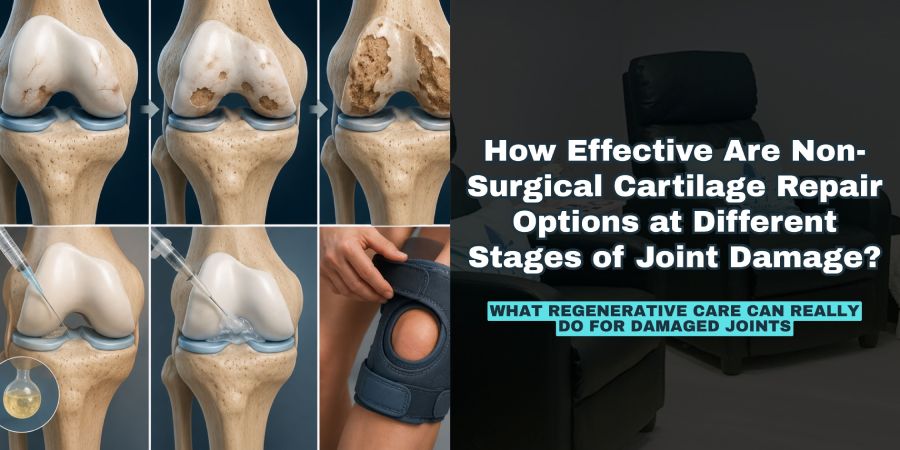
The effectiveness of non-surgical cartilage repair options varies significantly by stage. Early-stage damage responds best, with patients often seeing meaningful tissue repair, reduced inflammation, and restored function. Moderate-stage damage still benefits from regenerative treatments but typically requires more sessions and longer timelines. Severe, late-stage cartilage loss has the lowest response rate, though many patients still report pain reduction and improved mobility even when full cartilage regeneration isn’t possible.
Below is a closer look at how non-surgical cartilage repair options perform across early, moderate, and late stages of joint damage, plus how to choose the right approach for your specific situation.
Understanding the Stages of Cartilage Damage
Joint cartilage damage progresses through identifiable stages, and the stage you’re in shapes which non-surgical cartilage repair options are most likely to help. Knowing where you fall on the spectrum is the first step in choosing the right treatment.
Stage | What’s Happening | Common Symptoms |
Early (Grade 1) | Minor surface softening or fraying | Occasional stiffness, mild discomfort |
Mild (Grade 2) | Surface fissures, beginning of structural change | Intermittent pain, post-activity stiffness |
Moderate (Grade 3) | Significant cartilage thinning, joint space narrowing | Regular pain, reduced mobility, swelling |
Severe (Grade 4) | Cartilage almost gone, bone-on-bone contact | Constant pain, significant disability, deformity |
Treatment effectiveness drops as the stage advances, which is why early intervention matters so much in regenerative care.
Effectiveness of Non-Surgical Cartilage Repair Options by Stage
Each stage of damage responds differently to non-surgical cartilage repair options. Below is a closer look at how regenerative treatments perform at each stage and what to expect from each approach.
1. Early-Stage Damage (Grade 1)
Early-stage cartilage damage offers the highest response rate to non-surgical cartilage repair options. The tissue is still largely intact, the inflammatory environment is manageable, and the body’s natural healing mechanisms still have plenty to work with.
Stem cell therapy at this stage often delivers excellent results, with patients reporting reduced pain, improved mobility, and signs of actual tissue repair on imaging. PRP injections, peptide therapy, and targeted nutritional support all add to the effect.
Most early-stage patients see meaningful improvements within 4 to 8 weeks of starting a regenerative protocol, and many maintain those benefits for years with proper follow-up care.
2. Mild Damage (Grade 2)
Mild damage is one of the sweet spots for non-surgical cartilage repair options, since the cartilage has started to show structural changes but the joint environment is still favorable for repair. The body still has plenty of regenerative capacity at this stage.
This is the stage where many patients first seek out stem cell therapy in Lakewood Ranch and similar regenerative options. The combination of stem cells, anti-inflammatory support, and biomechanical changes often produces dramatic results.
Treatment plans at this stage typically include 2 to 4 stem cell sessions across several months, paired with supportive therapies and lifestyle changes that protect the joint moving forward.
3. Moderate Damage (Grade 3)
Moderate damage is where the effectiveness of non-surgical cartilage repair options starts to shift. The joint has lost meaningful cartilage thickness, and the inflammatory environment is harder to manage.
According to a review published in Frontiers in Pharmacology, patients with mild to moderate osteoarthritis (Kellgren-Lawrence grade 1-3) are considered the optimal candidates for mesenchymal stem cell therapy, with intra-articular injections showing promise in reducing pain and improving quality of life. This research supports what we see in our clinical experience with stem cell therapy for cartilage degeneration, where Grade 3 patients still see meaningful benefits even when the damage is more advanced.
Most moderate-stage patients see improvements within 8 to 12 weeks, though the gains tend to be incremental rather than dramatic. Consistent care, multiple sessions, and supportive therapies become especially important at this stage.
4. Severe Damage (Grade 4)
Severe cartilage damage is the most challenging stage for non-surgical cartilage repair options. The cartilage is largely gone, bone-on-bone contact is common, and the joint structure itself has often changed.
That said, many Grade 4 patients still benefit from regenerative care. The treatments may not regrow significant cartilage, but they often reduce inflammation, calm pain receptors, and improve the surrounding tissue health enough to support better mobility and quality of life.
For patients facing surgery, regenerative care can sometimes serve as a bridge, delaying or reducing the need for joint replacement. It’s also a valuable option for patients who aren’t surgical candidates due to age, health, or personal preference.
What Determines Effectiveness Beyond Stage
Stage isn’t the only factor that influences how well non-surgical cartilage repair options work. Several other variables play a meaningful role in determining outcomes.
- Age and overall health of the patient
- Body weight and joint loading patterns
- Inflammation levels in the joint and throughout the body
- Lifestyle factors like nutrition, sleep, and activity
- Previous injuries or surgical interventions
- Type of cartilage damage (focal lesion vs. diffuse degeneration)
Patients who address these factors alongside the regenerative treatment itself typically see better, longer-lasting results.
How Stem Cell Therapy Fits Across the Stages
Stem cell therapy is one of the most flexible non-surgical cartilage repair options available, with proven benefits across early and moderate stages and meaningful pain relief even at later stages. Patients who want to learn about regenerative medicine are often surprised at how versatile this single therapy can be across different stages of joint damage.
For early and mild damage, stem cell therapy for osteoarthritis often delivers the kind of transformation that allows patients to return to activities they thought they’d lost. For moderate damage, it can dramatically slow progression and improve daily function.
Even for severe damage, stem cell therapy for mobility and joint pain offers a non-surgical path to better comfort and function. The flexibility of the treatment is what makes it such a popular foundation for regenerative care across stages.
How to Choose the Right Non-Surgical Approach
The right plan among non-surgical cartilage repair options depends on your stage, your goals, and your overall health. Below are the most common patterns we recommend.
- Early damage: Single stem cell session paired with PRP and lifestyle support
- Mild damage: 2 to 3 stem cell sessions with peptide therapy add-ons
- Moderate damage: 3 to 4 stem cell sessions across 6 to 12 months
- Severe damage: Ongoing regenerative care focused on pain and mobility rather than tissue regrowth
The biggest mistake patients make is waiting too long. Early intervention always delivers better results than late intervention, even with the same treatment.
Start Your Anti-Aging Journey From the Inside Out
If you’re ready to explore HD ozone UV therapy and want to see what’s possible for your skin, our team would love to walk through the protocol with you. Book a consultation with Elite IV Hydration at (941) 388-8723 or schedule an appointment online. Two convenient locations in Lakewood Ranch and Sarasota, plus mobile service options for clients who prefer to stay home.
Frequently Asked Questions
Can non-surgical treatments fully reverse cartilage damage?
In early stages, yes, meaningful repair is possible. In later stages, the focus shifts more toward managing symptoms and slowing progression.
How long do results last?
Most patients see lasting benefits for 1 to 5 years depending on the stage, the protocol, and how well they support the joint between treatments.
Are non-surgical options safe?
Yes, especially when using your own stem cells and natural growth factors. Side effects are rare and typically mild.
Will insurance cover regenerative cartilage treatments?
Most insurance plans don’t yet cover regenerative care for cartilage damage, though some HSAs and FSAs do. Many wellness providers offer financing options to help.
Ready to Learn About Regenerative Options for Your Joints?
If you’re dealing with joint pain or cartilage damage and want to learn about regenerative medicine that could help, our team would love to walk you through the options. Reach out to Elite IV Hydration at (941) 388-8723 or book a consultation with Elite IVHydration online. With two convenient locations in Lakewood Ranch and Sarasota, mobile service options, and deep experience guiding patients through personalized non-surgical cartilage repair options, we’d love to help you find the right path forward for your joints.