"I've been dealing with knee pain for years, and I finally booked a consultation for stem cell therapy instead of jumping straight to surgery. The one thing I keep getting stuck on is the recovery. I run a business and can't just disappear for weeks, so I need to know the real stem cell therapy recovery time before I commit. Some places make it sound like you're back to normal the next day, others talk about months of healing. Which is it? I just want an honest timeline so I can plan around it."
Wanting a straight timeline before you commit is completely reasonable, especially when your schedule and your body are both on the line.
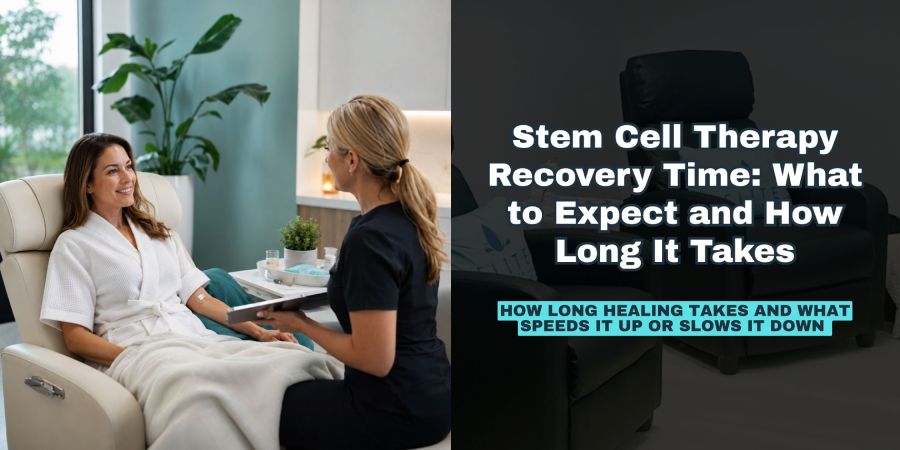
Here’s the honest split that a lot of clinics blur together. The procedure itself has very little downtime, since most people rest for one to three days and return to normal daily activities within a few days, with some mild soreness in the treated area. But the actual healing, the regeneration that makes the therapy worth doing, is a gradual process that unfolds over weeks to months. Many people notice early improvement within two to six weeks, meaningful gains around three to six months, and full benefits developing for up to a year.
Key Takeaways
Short downtime, long healing.
The procedure needs only a few days of rest, but real regeneration takes weeks to months.
Back to daily life fast.
Most people resume normal activities within two to three days, with mild soreness expected.
Results are gradual.
Early relief often shows in two to six weeks, with bigger gains around three to six months.
Full benefits take time.
Regeneration can keep improving for up to a year, so patience is part of the process.
Your timeline is personal.
Condition, joint, age, health, and how well you follow the plan all shape recovery.
It's not a guaranteed instant fix.
Stem cell therapy is a gradual, still-developing treatment, so realistic expectations matter.
So the real answer depends on which part of recovery you’re asking about, and it genuinely varies from person to person. Here’s the realistic, phase-by-phase picture.
What Is Stem Cell Therapy Recovery Time Really Measuring?
The word “recovery” trips people up here because it means two different things. The first is the downtime from the procedure itself, which is short. Most stem cell injections are minimally invasive, done in-office in a few hours, and followed by just one to three days of taking it easy. In that sense, you recover quickly.
The second meaning is the one that actually matters for results: the healing and regeneration timeline. That’s the stretch of weeks and months during which the therapy works to repair tissue and reduce inflammation from the inside out. This is the slower, more important clock, and it’s why understanding the full regenerative therapy for joint pain process helps you set the right expectations. When someone asks how long recovery takes, the honest answer separates the quick procedure downtime from the gradual regeneration that follows.
What Does the Stem Cell Therapy Healing Timeline Look Like?
While every person heals differently, most orthopedic stem cell recoveries follow a recognizable arc. Use this as a general map, not a guarantee.
Phase | Typical Timeframe | What’s Happening |
Immediate rest | First 1 to 3 days | Rest and mild soreness or swelling, which is normal |
Early phase | Weeks 1 to 2 | Inflammation settles, and some people feel early relief |
Activation phase | Weeks 2 to 6 | Tissue repair begins and mobility starts to improve |
Regeneration | Months 2 to 3 | Noticeable gains in comfort and joint function |
Peak results | Months 3 to 6 | The most significant improvements for most people |
Full benefit | Up to 12 months | Regeneration can keep developing and settling in |
The pattern is steady and gradual rather than sudden. Think of the injection as planting a seed, where the real growth happens quietly beneath the surface over the following months.
What Should You Expect Right After the Procedure?
The first few days are the easiest part of the timeline to plan around. Expect some soreness, stiffness, or mild swelling in the treated joint, which is a normal sign that the regenerative process is getting underway. Most people rest for one to three days and are back to light, normal daily activities within a couple of days, while holding off on strenuous exercise until their provider clears it.
Larger, weight-bearing joints like the knee or hip can feel sore a little longer than smaller joints, simply because they carry more load. If you’re exploring this for a specific joint, the recovery pattern in this look at stem cell therapy for knee pain gives a good sense of what that early window feels like. Anything beyond mild, improving discomfort is worth a quick call to your provider.
What Affects How Long Recovery Takes?
Your personal timeline depends on several factors, which is exactly why no honest clinic gives one fixed number. These are the big ones.
1. The Condition and Its Severity
Milder, earlier-stage damage generally responds faster and more completely than severe, long-standing degeneration. The more advanced the wear, the more gradual the improvement tends to be. That’s why early treatment often produces smoother recoveries.
2. The Joint or Area Treated
Location matters a lot. Large weight-bearing joints take longer to settle than smaller ones, and tendon or ligament work often has its own extended strengthening phase. Conditions like stem cell therapy for cartilage degeneration can follow a longer regeneration curve because of how slowly cartilage rebuilds.
3. Your Age and Overall Health
Younger, healthier bodies tend to mount a more robust healing response. That said, older patients still benefit, especially with a tailored plan and good baseline health. Factors like nutrition, weight, and smoking status all influence how efficiently you heal.
4. How Closely You Follow the Post-Treatment Plan
This one is within your control. Patients who follow their provider’s activity guidance and any recommended rehabilitation consistently tend to get the best, most durable results. Rushing back too hard, too soon can work against the regeneration you’re waiting on.
5. The Type of Procedure and Cells Used
Protocols vary between clinics and cell sources, and that variation affects the timeline. Your provider can explain how their specific approach shapes what your recovery should look like. This is a good question to raise during your consultation.
When Will You Actually Notice Results?
Because the benefits build gradually, it helps to know the rough milestones so you can track your own progress without worrying. Here’s when most people notice change:
- Weeks 1 to 2: reduced inflammation, and sometimes a first hint of pain relief.
- Weeks 2 to 6: early tissue repair, with mobility and daily comfort starting to improve.
- Months 2 to 3: more noticeable gains in joint function and a meaningful drop in pain.
- Months 3 to 6: the most significant improvements for most people, which is often when relief feels real.
- Up to 12 months: continued regeneration, with benefits settling in and, for many, lasting well beyond a year.
If your goal is lasting relief from ongoing discomfort, this timeline is worth weighing against other options, including how stem cell therapy for chronic pain is used as part of a longer-term plan.
Is Stem Cell Therapy a Guaranteed or Instant Fix?
No, and any honest provider will tell you so. Stem cell therapy is a gradual biological process, not an overnight cure, and results genuinely vary from person to person. It’s also still an emerging area of regenerative medicine, so while many patients report real relief, the research is developing and outcomes aren’t guaranteed. Setting realistic expectations is part of a good experience, not a downside.
The people who tend to do best are those who choose it thoughtfully, treat it as one part of a broader plan, and follow their post-treatment guidance closely. For some, it’s a way to explore non-surgical cartilage repair options and potentially delay or avoid a more invasive route, but that’s a conversation to have with a qualified provider who can assess your specific situation.
Frequently Asked Questions
How long is stem cell therapy recovery time?
It depends on which part you mean. The procedure itself involves only about one to three days of rest, with most people back to normal daily activities within a few days. The regeneration that drives results is gradual, with early improvement in two to six weeks, major gains around three to six months, and full benefits developing for up to a year.
How soon can I return to work after stem cell therapy?
Most people with desk-based or light-activity jobs return within two to three days, once the initial soreness eases. Physically demanding work or strenuous exercise should wait until your provider clears you. Following that guidance protects the healing process you’re investing in.
When will I feel results from stem cell therapy?
Many people notice early relief within two to six weeks as inflammation settles, with more meaningful improvement between three and six months. Full benefits can continue developing for up to a year. Because it’s a gradual process, patience genuinely pays off here.
Does stem cell therapy require physical therapy?
It can, depending on the condition and your provider’s protocol. Activity modification and, in some cases, guided rehabilitation help support the regeneration and improve results. Your provider will tell you whether it’s recommended for your situation.
Is stem cell therapy recovery painful?
Most people experience only mild soreness, stiffness, or swelling in the treated area for a few days, which is a normal part of the process. Any discomfort is usually manageable and improves quickly. If pain is severe or worsening, contact your provider promptly.
Healing Happens Beneath the Surface
The honest takeaway is that stem cell therapy asks for a little patience in exchange for gradual, potentially lasting results. You’ll be back to daily life within days, but the real work unfolds quietly over the following weeks and months, peaking around the three-to-six-month mark and often continuing well beyond. Plan around the short downtime, set realistic expectations for the long healing, and follow your provider’s guidance closely. Do that, and you give the therapy the best possible chance to do what it’s meant to do.
Plan Your Recovery With Elite IV Hydration
Recovery feels a lot less daunting when you know what to expect and have a team guiding you. The providers at Elite IV Hydration will walk you through a realistic timeline for your specific condition, answer your questions honestly, and help you plan around both the downtime and the healing. Call (941) 388-8723 or book a consultation to talk through whether stem cell therapy fits your goals and your schedule.