Key Takeaways
Heal Joints Without Surgery
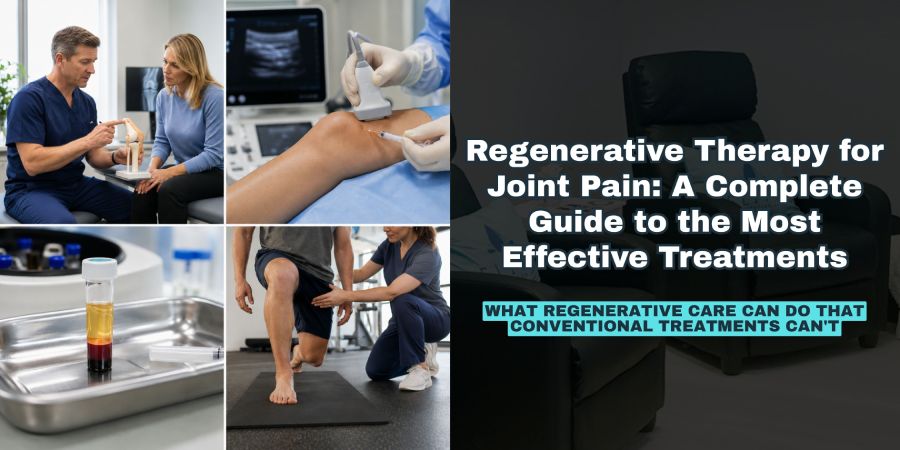
Regenerative therapy for joint pain uses the body’s own healing mechanisms to reduce inflammation, support tissue repair, and improve mobility without surgery.
Top Regenerative Treatment Options
The most effective options include stem cell therapy, PRP (platelet-rich plasma) injections, peptide therapy, and prolotherapy.
Best Results With Mild Damage
Patients with mild to moderate joint damage typically see the strongest results, though even advanced cases can benefit from meaningful pain relief.
Results Build Over Several Months
Most patients notice initial improvements within 4 to 8 weeks, with deeper benefits compounding across 3 to 6 months of care.
Right Provider Drives Real Results
Working with an experienced regenerative wellness provider ensures the right treatment is matched to your specific joint condition and goals.
Regenerative therapy for joint pain uses the body’s own healing capacity to address pain, inflammation, and tissue damage without surgery or long-term medication. The most effective options include stem cell therapy, PRP injections, peptide therapy, and prolotherapy. Each one approaches joint health from a slightly different angle, but the goal is the same: support the body in repairing itself.
Below is a complete guide to regenerative therapy for joint pain, what each option does, and how to choose the right approach for your specific condition.
Most Effective Regenerative Therapy for Joint Pain Treatments
Several regenerative options consistently deliver strong results for joint pain. Below are the regenerative therapy for joint pain treatments we recommend most often to patients seeking non-surgical care.
1. Stem Cell Therapy
Stem cell therapy is one of the most powerful regenerative therapy for joint pain options available. The treatment uses mesenchymal stem cells, which have the unique ability to develop into different tissue types and to release signaling molecules that reduce inflammation and stimulate repair.
According to a 2025 review of 59 clinical studies published in PMC, mesenchymal stem cell therapy was identified as the most effective intervention for pain reduction across orthopedic applications, outperforming PRP, peptide therapies, and biomimetic materials in meta-regression analysis. This research aligns with what we see in our practice, where stem cell therapy for chronic pain and injury recovery consistently delivers the strongest results across a range of joint conditions.
Treatment plans typically involve 1 to 3 sessions, with patients seeing initial improvements within weeks and deeper benefits compounding over several months.
2. PRP (Platelet-Rich Plasma) Therapy
PRP therapy is one of the most accessible regenerative therapy for joint pain options on the market. The treatment uses a concentrated portion of your own blood, rich in platelets and growth factors, injected directly into the affected joint.
Once injected, the platelets release growth factors that stimulate tissue repair, reduce inflammation, and support the body’s natural healing process. PRP works especially well for tendon injuries, mild to moderate osteoarthritis, and acute joint injuries.
Most patients receive 1 to 3 PRP injections spaced 4 to 6 weeks apart. Results typically appear within 4 to 6 weeks of the first treatment.
3. Peptide Therapy
Peptide therapy is one of the more targeted regenerative therapy for joint pain options because peptides act as signaling molecules that direct the body to perform specific repair functions. Different peptides target different goals, including reduced inflammation, increased collagen production, and improved cellular repair.
For joint pain, peptides like BPC-157 and TB-500 have become especially popular due to their effects on tendon, ligament, and cartilage healing. They’re often used alongside stem cell therapy or PRP to enhance and extend the results.
Peptide protocols typically run several weeks to several months, depending on the condition and the specific peptides used.
4. Prolotherapy
Prolotherapy is one of the oldest regenerative therapy for joint pain options still in use today. The treatment uses an irritant solution (often dextrose) injected into the joint or surrounding ligaments to stimulate a controlled healing response.
The mild irritation triggers the body’s natural repair process, increasing blood flow, stimulating connective tissue growth, and strengthening weakened ligaments. It’s especially effective for ligament laxity, chronic sprains, and certain types of back and joint pain.
Most patients need 3 to 6 sessions spaced 4 weeks apart to see lasting results.
5. NAD+ and IV Nutrient Support
NAD+ and targeted IV nutrient therapies aren’t joint injections, but they support regenerative therapy for joint pain at a cellular level. NAD+ specifically supports mitochondrial function, energy production, and cellular repair, all of which are critical to recovery from any joint condition.
These therapies work best as supportive treatments alongside the primary regenerative work. They help the body maximize its response to stem cells, PRP, or peptides by ensuring the underlying systems are nourished and functioning well.
Most patients combine NAD+ or nutrient IVs with their primary regenerative protocol for compounding benefits.
What Conditions Respond Best to Regenerative Therapy
The right regenerative therapy for joint pain plan depends partly on the condition being treated. Below are the most common joint conditions we see in regenerative practice.
Condition | Best Regenerative Options |
Mild to moderate osteoarthritis | Stem cell therapy, PRP |
Tendon injuries | PRP, peptide therapy |
Ligament sprains and laxity | Prolotherapy, peptides |
Cartilage damage | Stem cell therapy |
Post-surgical recovery | PRP, peptides, NAD+ support |
Sports injuries | PRP, stem cells, peptides |
Chronic joint inflammation | Stem cells, NAD+ support |
Each condition benefits from a tailored protocol rather than a one-size-fits-all approach.
How Regenerative Therapy Compares to Conventional Treatments
Conventional joint pain treatments like NSAIDs, corticosteroid injections, and surgery have their place, but they all have limitations. Pain medications mask symptoms without addressing the underlying issue. Cortisone injections can damage cartilage with repeated use. Surgery comes with significant cost, recovery, and risk.
Regenerative therapy for joint pain offers a different path. Instead of masking symptoms or replacing damaged tissue, regenerative treatments help the body repair itself. The results often take longer to appear, but they tend to last longer and avoid the side effects of conventional approaches.
Many patients use both approaches strategically, combining short-term symptom relief from conventional care with long-term tissue support from regenerative therapy.
What to Expect From Your First Visit
The first step in any regenerative therapy for joint pain plan is a thorough consultation. Your provider will review your medical history, examine the affected joint, and discuss your goals.
Imaging studies like X-rays or MRI may be ordered to assess the extent of joint damage. The provider then designs a treatment plan that matches your condition, your timeline, and your preferences.
Most patients start with a single session, then return for follow-up treatments based on how the joint responds. The team also typically recommends lifestyle adjustments like targeted exercise, anti-inflammatory nutrition, and weight management to support the treatment’s effectiveness.
Habits That Maximize Regenerative Therapy Results
Professional treatments deliver more value when paired with consistent habits that support healing. The two work together to improve recovery and extend results.
- Anti-inflammatory nutrition rich in omega-3s, leafy greens, and lean protein
- Targeted exercise that strengthens supporting muscles without stressing the joint
- Adequate hydration to support cellular function and nutrient delivery
- Quality sleep to support overnight repair and recovery
- Stress management to reduce inflammation system-wide
- Weight management to reduce load on weight-bearing joints
These habits add up over time and significantly improve outcomes for patients pursuing joint pain and mobility support through regenerative care.
Who Is a Good Candidate for Regenerative Therapy
Most adults dealing with joint pain are candidates for regenerative therapy for joint pain, though some situations respond better than others. Patients exploring stem cell therapy for mobility and joint pain typically fall into one of these categories.
- Active adults with sports injuries or overuse damage
- Patients with mild to moderate osteoarthritis in any major joint
- Pre-surgical patients looking to delay or avoid joint replacement
- Post-surgical patients seeking faster recovery
- Patients with chronic pain who haven’t responded to conventional care
- Older adults who aren’t candidates for major surgery
Patients curious to learn more about regenerative medicine often start with a simple consultation to see whether their specific condition is a good fit.
Take a Different Path Through Joint Pain with Elite IV Hydration
Joint pain doesn’t have to mean medication, cortisone, or surgery. The right regenerative therapy for joint pain offers a meaningful alternative that supports the body’s natural ability to repair itself. With consistent care and the right supporting habits, patients at every stage can find real, lasting relief. Contact Elite IV Hydration today to get started.
Frequently Asked Questions
How long does it take to feel results from regenerative therapy?
Most patients notice initial improvements within 4 to 8 weeks, with deeper benefits compounding across 3 to 6 months of care.
Is regenerative therapy painful?
The injections themselves are typically well-tolerated. Some mild soreness or swelling at the injection site is normal for a day or two after treatment.
How long do results last?
Most patients see lasting benefits for 1 to 5 years depending on the condition, the protocol, and lifestyle factors that support healing.
Will insurance cover regenerative therapy?
Most insurance plans don’t cover regenerative therapy yet, though some HSAs and FSAs do. Many providers offer financing options to make treatment more accessible.
Ready to Explore Regenerative Options for Your Joints?
If joint pain has been holding you back and you want a non-surgical path forward, our team would love to help you find the right plan. Reach out to Elite IV Hydration at (941) 388-8723 or book a consultation online. With two convenient locations in Lakewood Ranch and Sarasota, mobile service options, and deep experience guiding patients through personalized regenerative care, we’d love to help you reclaim the movement and comfort you’ve been missing.