Frequently Asked Questions
Proven Therapy For Skin Conditions
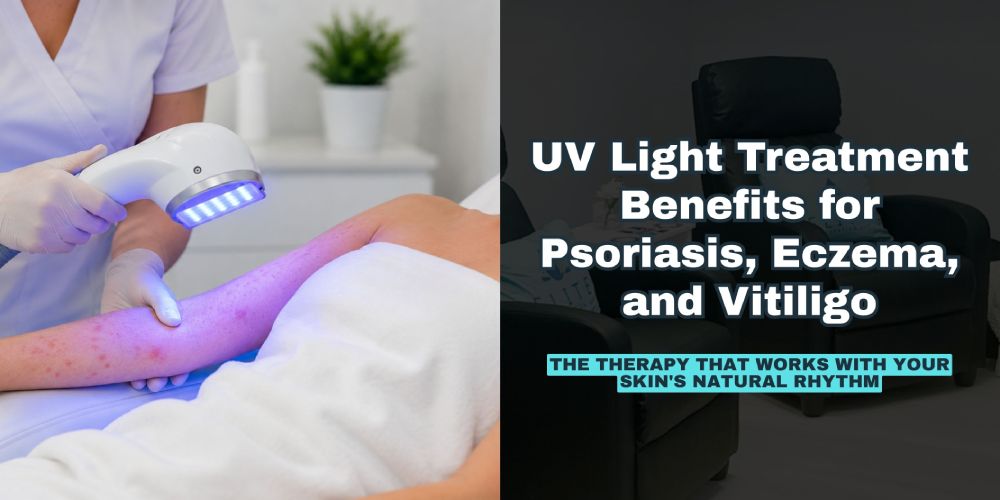
UV light treatment is a well-established approach for managing skin conditions like psoriasis, eczema, and vitiligo, used in dermatology for decades.
Medical Versus Wellness UV Approaches
Medical phototherapy for diagnosed skin conditions is typically administered by a dermatologist, while wellness-focused UV protocols offer complementary support.
How UV Calms Your Skin
The therapy works by calming immune activity in the skin, slowing rapid skin cell turnover, and supporting pigment production in vitiligo cases.
Short Sessions, Consistent Real Results
Sessions are short, painless, and most clients see meaningful results when treatments are spaced consistently over weeks.
Right Provider Makes The Difference
Choosing the right provider matters, whether you’re seeking medical phototherapy or a wellness-focused UV approach.
The simple version of UV light treatment benefits for skin conditions: controlled exposure to specific wavelengths of ultraviolet light can calm overactive skin responses, slow excessive skin cell production, and support repigmentation in some cases. It’s been used in dermatology for decades to manage conditions like psoriasis, eczema, and vitiligo.
Below is a full look at the UV light treatment benefits for each major skin condition, plus how wellness-focused UV protocols fit alongside medical phototherapy.
What Is UV Light Treatment?
UV light treatment, also called phototherapy, uses controlled exposure to ultraviolet light to influence biological processes in the skin and body. Different wavelengths produce different effects, which is why providers carefully match the type of UV light to the goal of treatment. The primary UV light treatment benefits in dermatology come from the way UV exposure modulates immune activity in the skin, helping to calm flare-ups and slow abnormal skin behavior.
In a clinical dermatology setting, narrowband UVB is the most common form of phototherapy used for psoriasis, eczema, and vitiligo. In wellness settings, UV light is often delivered as part of a broader systemic approach to supporting immune function and oxidative balance.
How Does UV Light Treatment Help Psoriasis?
Psoriasis happens when the immune system signals skin cells to grow far faster than normal, leading to thick, flaky, often itchy patches. The UV light treatment benefits for psoriasis come from the way controlled UV exposure slows that rapid cell turnover and tones down the underlying immune signaling.
What clients typically experience:
- Fewer flares over time
- Reduced redness and scaling in affected areas
- Less itching during and between treatments
- Slower progression of new patches
- A more stable baseline over months of consistent care
For diagnosed psoriasis, working with a dermatologist who specializes in phototherapy is the standard approach. Wellness-focused UV protocols can be a complementary support but aren’t a replacement for medical care.
How Does UV Light Treatment Help Eczema and Vitiligo?
Both eczema and vitiligo respond to UV light, but for different reasons. Understanding what UV does in each case helps set the right expectations for the UV light treatment benefits you’re likely to see.
Condition | How UV Light Treatment Helps |
Eczema | Calms overactive immune response, reduces inflammation and itching |
Vitiligo | Stimulates melanocytes to support pigment return in affected patches |
Chronic itch (with eczema) | Reduces underlying nerve and immune sensitivity over time |
Combined conditions | Targeted protocols may help when conditions overlap |
For both, consistent treatment matters more than a single dramatic session. Most clients see steady, gradual progress over weeks rather than overnight changes.
Can UV Light Treatment Help Beyond the Skin?
Yes. While the dermatology-focused UV light treatment benefits are well-known, UV exposure also has documented effects on systemic wellness. Some clients explore UV light treatment for pain relief, immune support, and circulation alongside their skin-specific protocols.
What UV light treatment may support beyond the skin:
- Immune system regulation
- Reduced systemic inflammation
- Mood and energy through vitamin D pathway support
- Recovery from chronic illness over time
- General oxidative balance in the body
These wellness applications usually involve different UV protocols than what’s used for skin conditions, so it’s worth asking your provider about their specific approach before booking.
How Does UV Light Pair With IV Ozone Therapy?
Many wellness clinics combine UV light exposure with IV ozone therapy in a single integrated session. The combination, often called HD Ozone UV therapy, exposes a small volume of your blood to ozone and UV light before returning it to your body.
Picture this: you settle into a comfortable chair, a practitioner places a small IV line, and a measured amount of blood is drawn into a sterile, closed system. There it’s combined with medical-grade ozone and exposed to UV light. The treated blood is then returned through the same IV line. The whole session takes about 60 to 90 minutes, and most clients describe feeling clear and energized afterward.
The combined approach often delivers more cumulative UV light treatment benefits than either modality alone, particularly for clients focused on overall wellness rather than a single skin condition.
How Often Should You Do UV Light Treatment?
Frequency depends on whether you’re working in a dermatology setting or a wellness setting, but most protocols for UV light treatment benefits follow a similar pattern.
A typical cadence:
- Initial loading phase: 2 to 3 sessions per week for 4 to 8 weeks
- Building phase: 1 to 2 sessions per week as benefits stabilize
- Maintenance phase: Every 2 to 4 weeks for ongoing support
- Acute flare support: Short-term boost as needed
Your provider will adjust the cadence based on how your skin or body responds. Most clients eventually settle into a maintenance rhythm that fits their schedule and goals.
How Do You Find the Right Provider?
Picking the right provider depends on what you’re trying to achieve. UV Light Treatment for diagnosed skin conditions usually means a dermatologist with phototherapy training, while wellness-focused UV protocols come from licensed wellness clinics.
What to look for in either case:
- Clear protocols specific to your situation
- Properly maintained UV equipment
- A pre-treatment consultation that covers your goals and history
- Transparent pricing and packaging
- Ongoing communication about your progress
A provider that takes their work seriously will happily walk you through their setup before you commit, which is part of what good UV light treatment benefits look like in practice.
A Wellness Path That Complements Your Skin Care
If you’re already working with a dermatologist on UV light treatment benefits for a diagnosed condition and want to layer in wellness-focused UV and IV support, Elite IV Hydration offers thoughtful protocols at both Lakewood Ranch and Sarasota locations. Call (941) 388-8723 or book online to talk through how the pieces fit together.
Frequently Asked Questions
Is UV light treatment safe?
When delivered by a trained provider with controlled exposure, UV light treatment is well-tolerated. Always disclose your full medical history during the initial consultation
How long until I see results?
Most clients notice gradual changes after several weeks of consistent treatment. Some see improvement sooner, others take longer depending on the condition.
Can I combine UV with other wellness modalities?
Yes, and many clients do. Just make sure your provider knows about every protocol you’re on so they can plan around interactions.