“I had a brutal workout this weekend followed by a night out that probably didn’t help, and I woke up feeling completely drained. I grabbed a sports drink out of habit, and it helped a little, but I’ve seen ads for IV hydration and I’m genuinely wondering if I’m just being cheap by not trying that instead. Is there an actual difference, or is IV therapy just a fancier, more expensive version of the same electrolyte drink I could get at the gas station?”
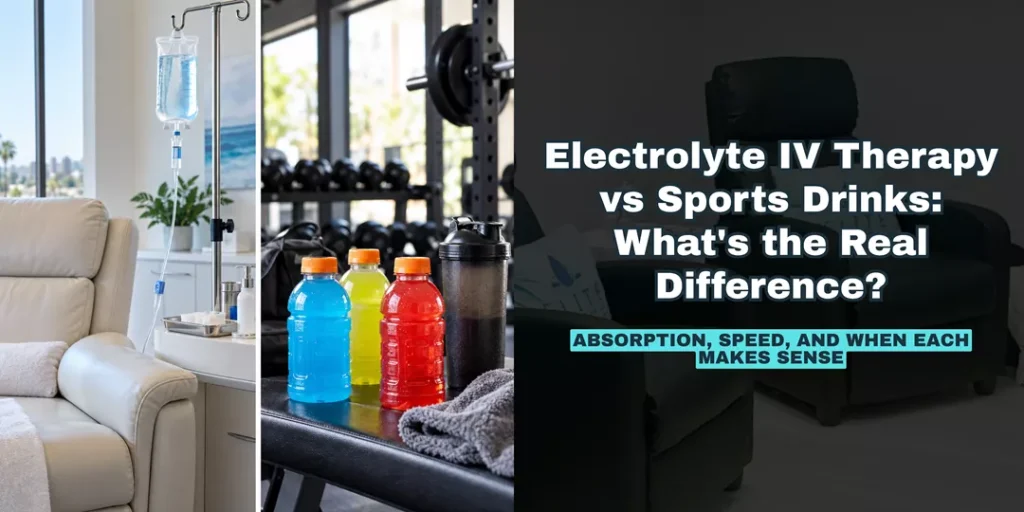
There’s a real difference, and it comes down to how each one actually gets electrolytes and fluids into your system. A sports drink is absorbed through your digestive tract, which takes time and depends on your gut actually being able to process it efficiently, something that’s often compromised after intense exercise, illness, or a rough night. Electrolyte IV therapy delivers fluids and electrolytes directly into your bloodstream, bypassing digestion entirely, which is why it tends to work faster when you’re dealing with more significant fluid loss than routine daily hydration.
Neither option is universally better, they’re suited to different levels of need. A sports drink is a reasonable, effective choice for routine hydration during normal activity. IV delivery tends to matter more when you’re dealing with something beyond that baseline, significant fluid loss, digestive upset that makes oral hydration less effective, or a situation where getting rehydrated quickly genuinely matters.
Key Takeaways
- Absorption method is the core difference. Sports drinks go through digestion; electrolyte IV therapy goes directly into the bloodstream.
- Digestion can be a real bottleneck. After intense exercise, illness, or heavy drinking, your gut’s ability to absorb fluids efficiently can be compromised, which is exactly when IV delivery has an advantage.
- Speed tends to favor IV therapy for significant fluid loss. Bypassing digestion generally means faster relief when you’re dealing with more than routine dehydration.
- Sports drinks are genuinely sufficient for routine hydration. For normal daily activity or light exercise, a sports drink usually does the job well without needing anything more involved.
- Cost and convenience favor sports drinks for everyday use. IV therapy makes more sense as an occasional, situational option rather than a daily replacement for basic hydration habits.
- Severe dehydration needs medical attention, not either option. Signs like confusion, inability to keep fluids down, or extreme dizziness call for emergency care, not a sports drink or a wellness IV session.
Understanding when each option actually fits your situation is more useful than assuming one is simply an upgraded version of the other.
Key Differences Between the Electrolyte IV Therapy and Sports Drinks
A handful of specific factors explain most of what separates these two approaches to rehydration in practice. Working through absorption, speed, customization, and cost makes clear why the right choice depends on the situation rather than one option always winning out.
1. Absorption Method
Sports drinks are absorbed through the digestive tract, which means their effectiveness depends on your gut actually being able to process fluids efficiently. IV delivery goes directly into the bloodstream, bypassing digestion entirely, which matters most when digestive absorption is already compromised, such as after significant physical exertion or illness.
2. Speed of Relief
Because IV therapy bypasses digestion, it generally works faster for significant fluid loss than an oral sports drink can. For routine, mild dehydration, the speed difference matters less, since your digestive system handles a normal fluid load without much trouble, and there’s little practical benefit to paying for faster delivery you don’t actually need.
3. Electrolyte Concentration and Customization
Sports drinks come with a fixed, general-purpose electrolyte formula. IV therapy can typically be tailored to a specific situation, adjusting the fluid volume and electrolyte composition based on what a particular session is addressing.
4. Cost
Sports drinks are inexpensive and widely available, making them the practical default for routine hydration. IV therapy costs meaningfully more, which is part of why it makes more sense as a situational option rather than an everyday hydration habit.
5. When Each Makes Sense
A sports drink is a reasonable, effective choice for normal daily activity, light exercise, or mild thirst. IV therapy tends to make more sense for significant fluid loss, situations where oral absorption is compromised, or when getting rehydrated quickly genuinely matters for how your day or event unfolds.
Comparing Electrolyte IV Therapy vs Sports Drinks
| Factor | Sports Drinks | IV Therapy |
| Absorption | Through digestion | Directly into bloodstream |
| Speed | Slower, depends on gut function | Faster, bypasses digestion |
| Customization | Fixed formula | Can be tailored to the situation |
| Cost | Low | Higher |
| Best for | Routine hydration, light activity | Significant fluid loss, situational need |
If you’re weighing this specifically around exercise or athletic activity, IV hydration for athletes covers how this comparison plays out in that specific context in more depth.
When a Sports Drink Is Genuinely Enough
For routine daily hydration, light to moderate exercise, or general thirst, a sports drink is a perfectly reasonable and effective choice. There’s no need to reach for something more involved when your digestive system is handling normal fluid intake without issue, and treating IV therapy as a routine replacement for basic hydration habits isn’t a good use of either your time or your budget. Plenty of people go their whole lives never needing anything beyond a good sports drink and consistent water intake, and that’s a completely reasonable place to stay.
When IV Therapy Makes More Sense
Significant fluid loss from intense exercise, heat exposure, illness, or a rough night out is where the direct-to-bloodstream approach genuinely matters more. IV hydration therapy covers what a typical session actually involves and what it’s designed to address, which is useful context if you’re trying to decide whether your specific situation calls for it.
Some providers also offer specific supplements as an add-on alongside a session, tailored to what you’re recovering from.
When to Seek Medical Care Instead of Either Option
Severe dehydration is a medical concern, not something either a sports drink or a wellness IV session should be relied on to address. Confusion, inability to keep any fluids down, extreme dizziness, or a rapid heart rate alongside dehydration symptoms warrant emergency medical attention rather than either of the options covered here. Neither a sports drink nor a wellness-focused IV session is designed or appropriate for treating a genuine medical emergency, and recognizing that distinction matters more than either comparison discussed above.
Frequently Asked Questions
Is electrolyte IV therapy always more effective than a sports drink?
Not universally. For routine, mild dehydration, a sports drink is generally sufficient. IV therapy’s advantage becomes more relevant with significant fluid loss or when digestive absorption is compromised.
Why would IV hydration work faster than drinking a sports drink?
Because it delivers fluids and electrolytes directly into the bloodstream, bypassing the digestive process entirely. This matters most when your gut’s ability to absorb fluids efficiently is already reduced, such as after intense exercise or illness.
Can I just drink more sports drinks instead of getting an IV?
For routine hydration needs, yes. For significant fluid loss, simply drinking more doesn’t necessarily solve the underlying absorption bottleneck the way direct IV delivery does.
Is IV hydration safe for regular, frequent use?
This varies by individual, and it’s worth discussing frequency with a qualified provider rather than assuming more is always better. IV therapy is generally positioned as a situational option rather than a daily replacement for basic hydration habits.
What are signs that I need medical attention rather than either a sports drink or IV therapy?
Confusion, an inability to keep fluids down, extreme dizziness, or a rapid heart rate alongside dehydration symptoms are signs of a medical emergency and should be treated as such, rather than addressed with either hydration option.
Choosing the Right Option for Your Needs
Electrolyte IV therapy and sports drinks both address the same basic goal, replenishing fluids and electrolytes, but they get there through genuinely different methods. A sports drink is the practical, effective choice for routine hydration, while IV therapy makes more sense for significant fluid loss or situations where oral absorption isn’t keeping up with what your body needs.
If you’re unsure which category your specific situation falls into, a conversation with a qualified provider can help you decide rather than guessing based on cost or convenience alone.
Considering Electrolyte IV Therapy? Call Elite IV Hydration Today!
Our team at Elite IV Hydration can help you figure out whether your specific situation calls for IV therapy or whether a simpler approach is genuinely sufficient. Every session is tailored to what you’re actually addressing.
Call (941) 388-8723 or schedule a consultation via our website to schedule a session or ask questions first.