Key Takeaways
Dehydration during summer can happen quickly due to heat, sweat loss, and humidity, especially when fluid and electrolyte intake does not match output.
Early symptoms like headache, fatigue, dizziness, and dark urine are worth taking seriously before they escalate.
IV hydration can help when you are struggling to catch up orally, especially if symptoms make it hard to drink enough.
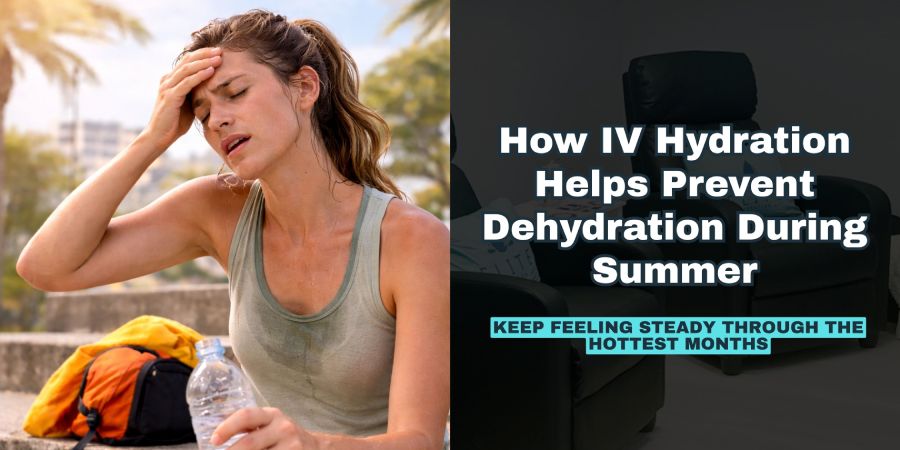
Dehydration during summer happens faster than most people expect because we lose fluids through sweat, heat exposure, and increased activity, and many of us do not replace enough water and electrolytes to keep up. The early signs can be easy to brush off, like headache, fatigue, dizziness, dry mouth, or darker urine, but those are your body’s warning lights.
At Elite IV Hydration, we see this every year whenever they visit for an IV hydration treatment. Clients come in thinking they just feel “off,” and it turns out they are running behind on fluids and electrolytes. In this guide, we’ll explain why dehydration during summer is so common, how to spot it early, and where IV hydration fits when drinking water is not enough.
Why Dehydration During Summer Is So Common
Heat and humidity do more than make you uncomfortable. They make it harder for your body to cool itself because sweat has a tougher time evaporating in humid conditions. That means you can sweat more, lose more fluids, and still feel overheated.
On top of that, summer habits stack the odds against you. More time outdoors, more workouts, more travel, more alcohol, and more sun exposure can all push you into dehydration without realizing it.
Early Signs of Dehydration During Summer We Tell Clients Not to Ignore
Most people wait until they are fully wiped out. We prefer catching dehydration earlier because it is easier to correct and less likely to snowball into heat exhaustion.
Here are the early signals we hear most often, with what they usually mean:
- Headache and fatigue: often linked to fluid loss and reduced blood volume
- Dizziness or lightheadedness: your body is struggling to keep circulation steady
- Dry mouth and dark urine: a common indicator you are behind on fluids
- Muscle cramps: can be a sign you are low on fluids and electrolytes
If symptoms escalate into heavy weakness, nausea, confusion, or you feel like you might faint, it is time to treat that as urgent.
How Hydration Actually Prevents Dehydration During Summer
Hydration is not only about water. When you sweat, you lose water and electrolytes. If you replace only water in large amounts after heavy sweating, some people still feel drained because electrolytes have not caught up.
In real life, prevention usually looks like a combination of:
- steady water intake throughout the day, not just at night
- electrolytes during high-sweat days or long outdoor time
- adjusting activity timing, especially during peak heat
Where IV Hydration Fits When Water Is Not Enough
This is the honest answer we give in our clinic. If you can drink fluids, keep them down, and you feel mildly dehydrated, oral hydration is often a great first step.
IV support makes the most sense when you are already behind and it is hard to catch up, especially if nausea, headaches, or fatigue are making it difficult to drink enough. Severe dehydration may require IV fluids in medical settings, and even milder dehydration can sometimes benefit from a monitored IV approach when symptoms are persistent and you need to rehydrate efficiently.
This is where our IV hydration treatments can be useful as part of a summer wellness plan, especially for people who spend long hours outdoors or feel chronically depleted in hot months.
What We Focus On During a Summer Hydration Visit
We keep it simple and goal-driven. We start by asking what your day has looked like, how much you have been sweating, and what symptoms you are feeling. From there, we tailor support based on what you need most.
For many clients, an IV hydration treatment is less about “extra” and more about getting back to baseline so the next few days do not feel like a struggle.
How IV Options Relate to Energy, Recovery, and Summer Plans
A lot of people use the phrase IV therapy as a catch-all. What matters is matching the approach to the problem. For summer dehydration, the priority is fluids and electrolyte balance.
You may also hear people call it IV drip therapy, which simply refers to fluids delivered through an IV at a controlled pace. The name is less important than whether the plan fits your symptoms and whether you are a good candidate for IV support.
Frequently Asked Questions
How fast can dehydration during summer set in?
It can happen within hours during heavy sweating or long sun exposure, especially if you are not replacing fluids consistently.
What is the easiest way to tell if we are dehydrated?
Thirst, darker urine, peeing less often, fatigue, and dizziness are common early signs.
Is water enough to prevent dehydration?
Sometimes, yes. But if you are sweating heavily, electrolytes often help because sweat loss includes both water and salts.
When should we consider IV hydration?
If you cannot keep up with fluids by mouth, feel significantly unwell, or symptoms are not improving, IV fluids may be appropriate. Severe cases should be handled in a medical setting.
Can dehydration lead to heat exhaustion?
Yes. Dehydration increases the risk of heat-related illness, including heat exhaustion and heat stroke.
Feel Better Fast Then Stay Ahead of the Heat at Elite IV Hydration
Summer should not take you out for a full day because you got behind on hydration. If you are noticing signs of dehydration during summer and you are struggling to catch up, we can help you rehydrate efficiently and build a plan that keeps you feeling steady through the hottest months. Contact Elite IV hydration today to schedule an appointment.