"I keep seeing UV therapy pop up in wellness circles, with claims that it recharges you at a cellular level. Living in Florida, I already get plenty of sun, so paying for more UV light honestly confuses me. But people I trust swear it helped their energy and recovery, and I keep hearing about UV light and cellular regeneration like it's the next big thing. Is there real science here, or is it mostly marketing? Before I book anything, I want to know what it actually does and whether it's even safe for me."
That skepticism is healthy, and you’re asking exactly the right question. Light-based therapies are having a real moment in wellness, from red light panels to UV treatments, and it’s worth separating what’s proven from what’s promotional.
The light most closely tied to cellular energy and repair is actually red and near-infrared, not UV. UV light affects your cells very differently, and the effect depends heavily on the dose. Uncontrolled UV, like sunburns and tanning, damages cells, while controlled, therapeutic UV has specific, legitimate uses, mostly around immune modulation and certain skin conditions.
Key Takeaways
Wavelength matters most.
Red and near-infrared light drive cellular energy and repair, while UV works through different mechanisms entirely.
UV is dose-dependent.
Uncontrolled UV damages cells, but controlled therapeutic UV has specific, legitimate uses.
The honest framing.
When you see UV therapy promoted for cellular regeneration, it means it may support your body’s natural healing, not directly rebuild cells.
Real medical uses exist.
UVB phototherapy is well-established for skin conditions, and UV can support vitamin D and immune modulation.
Evidence is still limited.
Many wellness UV claims lack large clinical trials, so it belongs in the complementary-support category, not the cure category.
Medical oversight is essential.
UV therapy isn’t right for everyone, so candidacy and safety screening should come first.
So when you see UV therapy marketed for cellular renewal, the accurate way to read it is that it may support your body’s natural healing and immune processes, not that it directly rebuilds your cells. Under medical supervision, it can be a useful complementary tool, and the sections below walk through what’s real, what’s limited, and what to check first.
What's the Real Connection Between UV Light and Cellular Regeneration?
Light genuinely can influence your cells, but the details matter. The most studied pathway for cellular energy and repair is photobiomodulation, which uses red and near-infrared light to stimulate the mitochondria, the tiny power plants inside your cells. That process is what much of the “light heals cells” conversation is actually built on, and it plays a big part in the role of cellular energy throughout the body.
UV light sits in a different, higher-energy part of the spectrum, and it doesn’t work the same way. Rather than gently charging up your mitochondria, UV interacts with cells through effects on DNA, immune signaling, and vitamin D production.
That’s why pairing UV light with the idea of cellular regeneration can be a little misleading if it implies UV directly rebuilds tissue. The more accurate picture is that certain controlled UV exposures can influence how your immune system and repair processes behave, which is a real effect, just not the same as the mitochondrial recharge people associate with red light.
How Does UV Light Actually Affect Your Cells?
The single most important variable with UV is dose. The same type of light that harms your skin in the sun can, in carefully controlled clinical amounts, do something very different. This table lays out that contrast.
Factor | Controlled Therapeutic UV | Uncontrolled UV Exposure |
Setting | Clinical, precisely dosed | Sun, tanning beds |
Effect on cells | Can activate DNA-repair and antioxidant enzymes, modulate immunity | Direct DNA damage and oxidative stress |
Purpose | Immune and skin-condition support | None, and often harmful |
Oversight | Medical supervision and screening | None |
Long-term result | Potential complementary benefit | Photoaging and higher skin cancer risk |
The takeaway is that context changes everything. A dermatologist’s phototherapy booth and a tanning bed both use ultraviolet light, but they are not remotely the same thing for your cells.
What Is UV Light Therapy Used For in a Wellness Setting?
UV therapy has a few legitimate lanes. In dermatology, controlled UVB phototherapy is well-established for skin conditions like psoriasis, eczema, and vitiligo, where it calms overactive skin cells and modulates the local immune response. UV exposure also drives vitamin D synthesis, which supports DNA repair and immune function, and you can read more about that immune angle in this overview of UV light treatment.
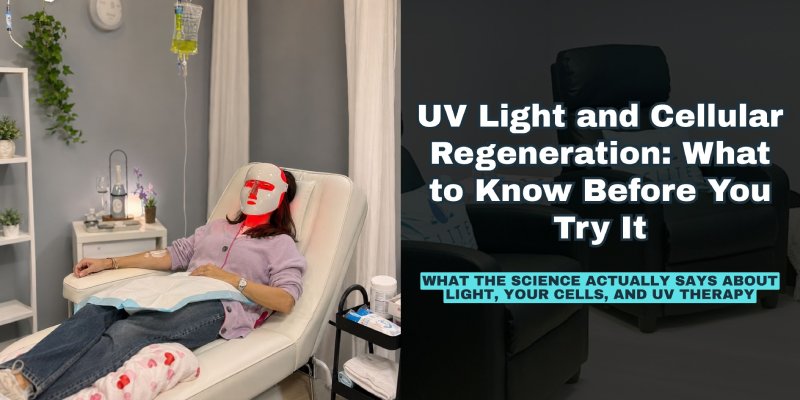
In integrative wellness clinics, UV often shows up as ultraviolet blood irradiation, sometimes combined with ozone. A small amount of blood is exposed to UV light and returned to the body, with the goal of nudging the immune system, inactivating pathogens, and supporting circulation. Research does show UV can modulate circulating immune cells, so the mechanism isn’t imaginary. That said, large, rigorous clinical trials for many of these specific uses are still limited, which is exactly why it should be viewed as complementary support delivered under medical supervision, not a proven standalone treatment.
What to Know Before Trying UV Light Therapy
Before you book, run through these five points. They keep your expectations realistic and your experience safe.
1. Understand What It Can and Can’t Do
Go in expecting support, not a miracle. UV therapy may help your body’s immune and repair processes, but it doesn’t directly regenerate cells the way marketing sometimes implies. Its best-supported uses are immune modulation and certain skin conditions, and you can see the clearest evidence in these UV light treatment benefits for skin concerns.
2. Know That It’s Complementary, Not a Cure
Think of UV therapy as one piece of a plan, not a replacement for medical care. It works best alongside good sleep, nutrition, hydration, and any treatment your doctor has prescribed. If a provider promises it will cure a serious condition on its own, treat that as a red flag.
3. Insist on Medical Oversight
Dose and screening are what separate safe UV therapy from risk. A qualified provider should evaluate your health history, tailor the protocol, and monitor your response. Skipping that step is where wellness UV goes wrong, so oversight is non-negotiable.
4. Check the Contraindications First
UV therapy isn’t safe for everyone. Photosensitive conditions like lupus, photosensitizing medications, active anticoagulant use, and certain enzyme deficiencies can make it inappropriate, and pregnancy calls for extra caution. A proper intake screening catches these before treatment.
5. Don’t Confuse It With Sun Exposure
More Florida sun is not a substitute for controlled therapy, and it isn’t harmless. Uncontrolled UV raises your risk of photoaging and skin cancer, while clinical UV is dosed and monitored for a specific purpose. The two should never be treated as interchangeable.
Who Might Consider UV Light Therapy, and Who Should Avoid It?
UV therapy fits some people well and others not at all, so honest self-screening helps before you ever call a clinic. Here’s a general guide, though only a provider can make the real determination:
- May be worth exploring: people seeking complementary immune or recovery support, especially those recovering from illness or managing chronic inflammation under a provider’s guidance.
- Often paired with other goals: some clients use it alongside strategies for inflammation and discomfort, similar to how this UV light treatment for pain relief approach is applied.
- Should avoid or use extreme caution: anyone with photosensitive disorders, those taking photosensitizing drugs, people on blood thinners, individuals with certain enzyme deficiencies, and anyone pregnant unless expressly cleared.
- Should check with a doctor first: people with a history of skin cancer or significant sun damage, before considering any UV-based therapy.
If you fall into a caution category, that doesn’t necessarily rule you out forever, but it does mean a conversation with a qualified provider must come first.
How Does UV Light Fit Into a Broader Wellness Plan?
UV therapy is at its best as a supporting player rather than the main event. In many clinics, it’s delivered alongside ozone and IV nutrient support, with the combined goal of supporting immune resilience, circulation, and recovery. The value comes from how it fits into a larger, personalized plan, not from any single session performing magic.
At Elite IV Hydration, UV is offered as part of HD Ozone UV Therapy under medical oversight, and it pairs naturally with skin-focused goals like the ones covered in HD Ozone UV Therapy for skin health. Realistic expectations, proper screening, and a plan built around your actual health goals are what turn it from a trend into a genuinely useful tool.
Frequently Asked Questions
Does UV light regenerate cells?
Not directly. The light most associated with cellular energy and repair is red and near-infrared, through a process called photobiomodulation. UV light works differently, mainly by influencing immune signaling, DNA-repair pathways, and vitamin D production, which can support the body’s natural healing rather than rebuild cells outright.
Is UV light and cellular regeneration backed by science?
Partly, and the nuance matters. UV’s effects on immune cells and its established role in treating certain skin conditions are well-documented, so those claims have real support. The broader idea that UV directly regenerates cells is not well-established, so honest providers frame it as complementary immune and recovery support instead.
Is UV therapy safe?
Under proper medical supervision, UV therapy is generally well-tolerated, with mild, short-lived effects like warmth or slight light-headedness for some people. Safety depends heavily on correct dosing and screening for contraindications. It is not the same as unprotected sun exposure, which carries real long-term risks.
How is UV therapy different from red light therapy?
They use different parts of the light spectrum and work through different mechanisms. Red and near-infrared light target the mitochondria to support cellular energy and tissue repair, while UV light influences immunity, DNA-repair pathways, and vitamin D. Neither is a substitute for the other, and they serve different goals.
Can I just get UV from the sun instead?
No, and it’s an important distinction. Sun exposure is uncontrolled and increases your risk of photoaging and skin cancer, while clinical UV therapy is precisely dosed and monitored for a specific purpose. Living in a sunny place like Florida does not replace supervised therapy, and more sun is not the healthier choice.
Real Benefits Start With Realistic Expectations
UV therapy isn’t magic, and it isn’t meaningless either. Used the right way, under the right supervision, and for the right reasons, it can be a genuine complement to your immune and recovery goals. The trouble only starts when the marketing outruns the science. Go in understanding the wavelength distinction, treat it as support rather than a cure, get properly screened, and you’ll be able to judge for yourself whether it earns a place in your routine. Informed and cautious always beats hopeful and rushed.
Talk to Elite IV Hydration About UV Therapy
Curious whether UV therapy is a fit for your health goals? The team at Elite IV Hydration will review your history, explain what to realistically expect, and screen for safety before recommending anything. Call (941) 388-8723 or book a consultation to explore HD Ozone UV Therapy with proper medical oversight, so any decision you make is an informed one.