Key Takeaways
Stem cell therapy supports regeneration, not reversal
It works with the body’s natural healing processes rather than dramatically reversing aging.
Results vary significantly by patient.
Age, overall health, lifestyle, and treatment protocol all affect outcomes.
It's not FDA-approved for anti-aging specifically.
Most anti-aging applications are considered investigational or off-label.
Realistic timelines run months, not days.
Benefits typically build over 3 to 6 months following treatment.
It works best as part of a broader wellness strategy.
Stem cell therapy for anti-aging and regenerative wellness amplifies the effects of good nutrition, sleep, exercise, and stress management.
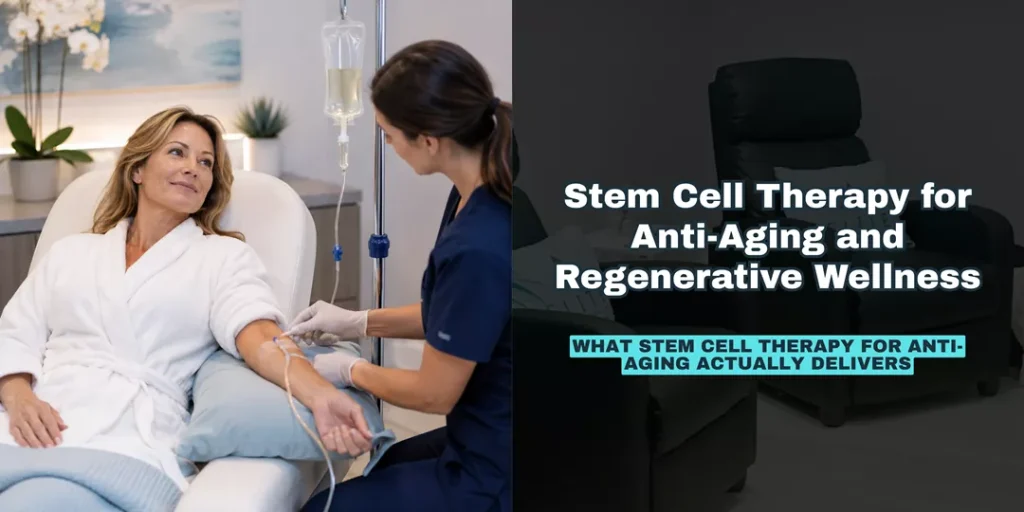
Stem cell therapy for anti-aging and regenerative wellness involves administering stem cells (or stem cell-derived products) intravenously or through targeted injection to support tissue repair, reduce inflammation, and potentially slow age-related decline. The therapy isn’t a fountain of youth, and any clinic that promises dramatic visible reversal of aging is overselling. What it can do, based on growing research and clinical observation, is support the body’s own regenerative processes in ways that complement broader wellness routines.
For most patients considering this treatment, understanding what stem cell therapy for anti-aging and regenerative wellness can realistically deliver, what it can’t, and who’s the right candidate is what separates a worthwhile investment from a disappointing one.
What is stem cell therapy for anti-aging and regenerative wellness?
Stem cell therapy for anti-aging and regenerative wellness uses stem cells (specialized cells with the ability to develop into different cell types and support tissue repair) to potentially slow or address age-related decline. The therapy works on a different principle than traditional anti-aging treatments like Botox or fillers, which target symptoms rather than underlying biological processes.
The basic mechanism:
- Stem cells release signaling molecules that influence surrounding tissues
- They support the body’s natural repair processes by reducing inflammation
- They may help regenerate damaged or aging tissues depending on the treatment site
- They influence immune function in ways that affect overall wellness
- The effects build gradually as the body responds to the cellular signals
The cells used in modern wellness applications typically come from umbilical cord tissue or other ethically sourced material, not from controversial sources like embryonic tissue. The specific source and processing significantly affect quality and outcomes, which is one reason the choice of clinic matters more than most patients realize.
How does stem cell therapy for anti-aging and regenerative wellness actually work?
Stem cell therapy works through several mechanisms that researchers continue to study. The processes below explain what the cells do once administered.
- Paracrine signaling
When stem cells enter the body, they release a range of signaling molecules called growth factors, cytokines, and exosomes. These molecules communicate with surrounding cells and tissues, often producing more measurable effects than the stem cells themselves.
Much of the therapeutic value of stem cell therapy for anti-aging and regenerative wellness comes from this signaling rather than from the cells “becoming” new tissue. The cells essentially direct the body’s own repair systems.
- Inflammation modulation
Chronic low-level inflammation is one of the most consistent biological markers of aging. Stem cell therapy appears to modulate inflammatory responses, potentially reducing the underlying inflammation that contributes to age-related decline.
This anti-inflammatory effect is one of the most consistently observed benefits in research and clinical practice. It explains why patients often report broad improvements rather than specific localized changes.
- Tissue repair support
Stem cells can differentiate into various cell types and support the body’s repair of damaged tissues. The effects are typically modest and gradual rather than dramatic, but cumulative over time.
This is where realistic expectations matter most. Stem cell therapy for anti-aging and regenerative wellness doesn’t rebuild major tissues overnight. It nudges the body’s repair systems toward more efficient function.
- Immune system support
Aging affects immune function in measurable ways. Stem cell therapy appears to influence immune cell behavior, potentially supporting healthier immune response patterns.
This effect contributes to the broader wellness improvements many patients report, even when the original goal was more aesthetic.
- Mitochondrial influence
Some research suggests stem cells can transfer mitochondria to recipient cells, potentially supporting cellular energy production in aging tissues. This area of research is still developing but offers one of the more intriguing mechanisms of action.
The cumulative effect across these mechanisms is what produces the gradual, broad improvements patients report. Understanding the mechanisms helps set realistic expectations for the type and timeline of changes you might experience.
What can stem cell therapy for anti-aging and regenerative wellness actually deliver?
This is where honest expectation-setting matters most. The realistic outcomes below reflect both research findings and patient-reported experiences.
What patients commonly report:
- Improved energy and stamina within 4 to 12 weeks
- Better sleep quality as inflammation decreases
- Reduced joint and muscle aches over 2 to 4 months
- Improved skin tone and texture gradually over 3 to 6 months
- Enhanced recovery from exercise within weeks
- Better mental clarity and focus as overall inflammation drops
- General sense of wellbeing that’s hard to quantify but consistently reported
What stem cell therapy realistically doesn’t deliver:
- Dramatic visible reversal of aging in days or weeks
- Removal of wrinkles the way cosmetic procedures do
- Permanent reversal of chronic conditions without ongoing care
- Guaranteed results since responses vary significantly
- A substitute for fundamental wellness habits like sleep, nutrition, exercise
The gap between what stem cell therapy for anti-aging and regenerative wellness can do and what aggressive marketing claims it does is exactly where patient disappointment usually originates. Setting realistic expectations upfront protects both the investment and the experience.
Who is a good candidate for stem cell therapy?
Stem cell therapy for anti-aging and regenerative wellness works best for specific patient profiles. The factors below help identify whether you’re likely a good candidate.
Strong candidate factors:
- Age 35 to 70 (younger patients may not benefit as much; older patients may see less response)
- Generally healthy with no active autoimmune conditions
- Committed to broader wellness habits including sleep, nutrition, and exercise
- Realistic expectations about gradual rather than dramatic changes
- Specific wellness goals beyond pure aesthetics
- Not currently undergoing cancer treatment or recent immunotherapy
- Free from active infection or acute illness
Patients who don’t fit this profile may still benefit but should have additional consultation about whether the treatment is appropriate for their specific situation. Some conditions (active cancer, certain autoimmune diseases, ongoing immune suppression) are typical contraindications.
What does treatment actually involve?
Stem cell therapy sessions vary based on the specific protocol and goals. The typical experience includes the following stages.
Stage | What Happens |
Initial consultation | Health history, goals, realistic expectations discussion |
Treatment planning | Customized protocol based on patient profile |
Treatment session | IV administration or targeted injection (30 to 90 minutes typical) |
Immediate response | Most patients feel normal afterward; some report mild fatigue |
Short-term changes | Subtle improvements may appear in 1 to 4 weeks |
Cumulative benefits | Build gradually over 3 to 6 months |
Follow-up planning | Discussion of repeat treatments if appropriate |
Most patients tolerate the treatment well with minimal downtime. Side effects, when they occur, are typically mild and short-term (mild fatigue, temporary headache, minor injection site soreness for targeted treatments).
The protocol matters significantly. A single treatment is sometimes appropriate; other patients benefit from a series of treatments spaced over months. The right approach depends on the patient and the goals.
What's the realistic timeline for results?
Setting realistic expectations on timeline is one of the most important parts of pre-treatment conversation. The chart below summarizes typical patient experiences.
Timeframe | What Patients Typically Notice |
Week 1 | Minimal noticeable change |
Weeks 2 to 4 | Subtle energy and sleep improvements |
Month 2 | More consistent energy, mood improvements |
Month 3 | Some skin and recovery improvements appearing |
Months 4 to 6 | Cumulative benefits more apparent |
Beyond 6 months | Effects may stabilize or gradually diminish without follow-up |
Patients expecting dramatic week-one changes are almost always disappointed. Patients expecting gradual cumulative improvements over months are typically pleased with the results.
How does stem cell therapy compare to other regenerative treatments?
Several therapies overlap with stem cell therapy in goals and mechanisms. The chart below shows where each fits.
Therapy | Primary Benefit | Typical Frequency |
Stem cell therapy | Cellular signaling, tissue repair | 1 to 3 treatments per year |
NAD+ therapy | Cellular energy, mitochondrial function | Monthly or bi-monthly |
Peptide therapy | Targeted signaling, specific outcomes | Daily or weekly protocols |
PRP (platelet-rich plasma) | Localized tissue repair | 3 to 4 treatments per series |
Ozone therapy | Oxidative stress reduction, immune support | Series of treatments |
Many patients find the strongest results come from combining therapies strategically rather than relying on any single treatment. NAD+ therapy and peptide therapy work particularly well alongside stem cell therapy because they address different mechanisms of cellular aging.
For patients also dealing with specific joint or musculoskeletal concerns, stem cell therapy for knee pain and similar targeted applications use the same underlying principles with more localized focus.
Ready to Explore Regenerative Options for Your Joints?
If joint pain has been holding you back and you want a non-surgical path forward, our team would love to help you find the right plan. Reach out to Elite IV Hydration at (941) 388-8723 or book a consultation online. With two convenient locations in Lakewood Ranch and Sarasota, mobile service options, and deep experience guiding patients through personalized regenerative care, we’d love to help you reclaim the movement and comfort you’ve been missing.
What questions should you ask before booking?
The questions below help separate clinics that practice responsibly from clinics that overpromise.
- What source of stem cells do you use, and how are they processed?
- What evidence supports the specific protocol you’re recommending?
- What’s your realistic expectation for my specific situation?
- What are the potential side effects and risks?
- How will you measure whether the treatment is working?
- What follow-up care do you recommend?
- What does the full cost include, and are there hidden charges?
- What’s your refund or follow-up policy if I don’t see results?
A clinic that answers these questions transparently is one that’s likely to deliver an honest experience. A clinic that deflects or oversells is one to avoid.
Frequently Asked Questions
Is stem cell therapy FDA-approved for anti-aging?
Most anti-aging applications of stem cell therapy are considered investigational or off-label. The FDA has approved specific stem cell products for narrow medical conditions but not for general anti-aging use. Clinics offering this therapy should be transparent about regulatory status and not overstate FDA approval.
How much does stem cell therapy cost?
Costs vary widely by clinic, protocol, and stem cell source. Typical ranges run from $2,500 to $15,000 per treatment course, with most quality protocols falling in the middle of that range. The cheapest options are often not the best value, and the most expensive aren’t necessarily the most effective.
How long do the benefits last?
Effects typically persist for 6 to 18 months following treatment, with significant individual variation. Some patients see lasting benefits; others see gradual return to baseline. Repeat treatments often produce more sustained results than single sessions.
Are there side effects or risks?
Most patients tolerate stem cell therapy well with minimal side effects. Mild fatigue, temporary headache, or minor injection site reactions are the most common. Serious adverse events are rare when treatment is performed by qualified clinicians using quality cell sources, but quality control matters significantly.
Can stem cell therapy replace healthy lifestyle habits?
No. Stem cell therapy for anti-aging and regenerative wellness works best alongside good sleep, nutrition, exercise, and stress management. It amplifies the effects of healthy habits rather than substituting for them. Patients with unhealthy baseline habits typically see less benefit than patients who treat the therapy as one component of broader wellness.
Make the Right Decision for Your Wellness Journey
Stem cell therapy for anti-aging and regenerative wellness is neither the miracle some clinics market nor the scam some skeptics dismiss it as. It’s a wellness investment with real potential when the patient profile fits, expectations are realistic, and the clinic operates responsibly. The patients who get the most out of it are the ones who treat it as one tool in a broader wellness strategy rather than a magic fix. Setting realistic expectations before booking is what makes the difference between a worthwhile experience and a disappointing one.